

Choosing the Right Kitchen Floor in Chandler
A kitchen floor has to do more than look good. It needs to handle daily foot traffic, cooking spills, dropped utensils, pets, kids, and the steady movement that comes with one of the busiest rooms in the home. In Chandler, homeowners may also want a surface that feels comfortable in a warm climate and holds up well when dust and grit get tracked indoors.
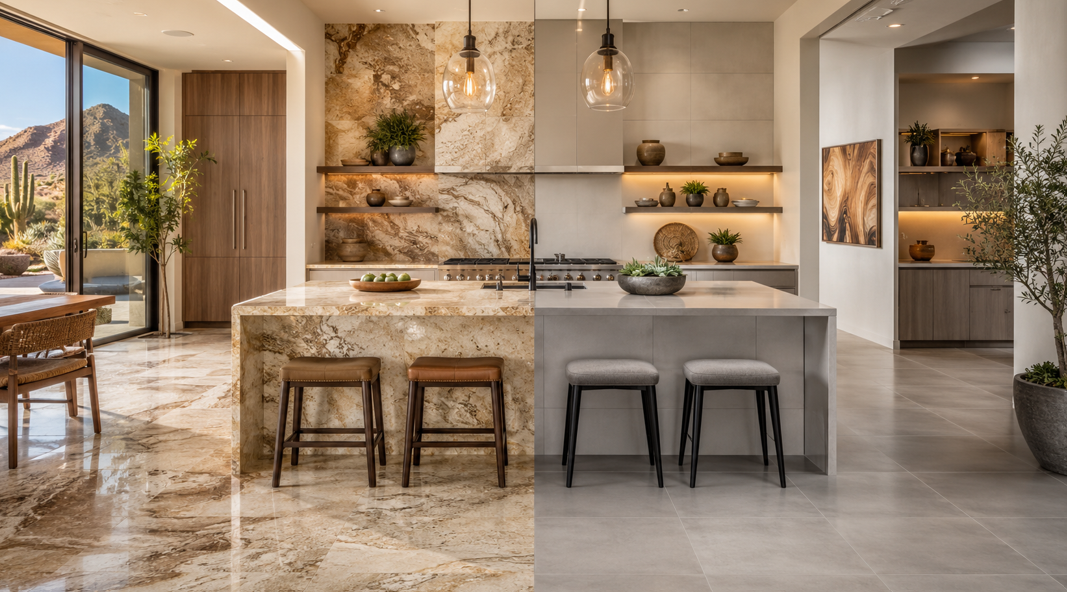
Natural stone and porcelain tile are both strong choices, but they create very different experiences. Natural stone offers genuine variation, organic texture, and a one-of-a-kind look. Porcelain tile offers greater visual consistency, broad design flexibility, and generally simpler routine care.
For many homeowners, the decision comes down to this: choose natural stone if you value authentic character and a premium, custom appearance. Choose porcelain tile if you prefer predictable patterns, low-maintenance performance, and dependable resistance to everyday kitchen spills.
At Manufacturers Floor Covering Outlet, Chandler-area homeowners can compare materials, colors, finishes, and installation options with help from knowledgeable flooring professionals. Seeing the products in person can make the differences much clearer than viewing small samples online.
The best choice is not the same for every household. The right floor depends on your design goals, maintenance preferences, budget, subfloor condition, and how your kitchen is used each day. The comparison below looks at appearance, durability, moisture performance, cleaning, comfort, installation, and long-term value so you can make a confident decision.
What Makes Natural Stone and Porcelain Tile Different?
Both materials fall into the hard-surface flooring category, but they are created in completely different ways. That difference affects how each floor looks, feels, performs, and ages.
What Is Natural Stone Flooring?
Natural stone is quarried from the earth and cut into tiles or slabs. Common flooring options include travertine, slate, marble, granite, and limestone. Each stone has its own density, porosity, texture, and care requirements.
The biggest visual advantage of natural stone is variation. One tile may include soft mineral movement, while the next may have stronger veining, small fossil-like markings, or subtle color shifts. These changes are part of the material’s natural appeal. They create a floor that cannot be copied exactly in another home.
Performance varies by stone type. Dense granite may respond differently to kitchen use than softer limestone or polished marble, so selection needs to balance style with practical care.
What Is Porcelain Tile?
Porcelain tile is made from refined clay and fired at high temperatures. This process creates a dense material with low water absorption. Porcelain is available in a wide range of colors, patterns, shapes, sizes, and surface textures.
Modern porcelain can resemble stone, hardwood, or concrete. Stone-look designs create a realistic appearance with less natural variation and generally simpler care.
Porcelain is generally more consistent in size and appearance, which supports clean layouts and easier coordination with cabinets, countertops, and adjoining rooms.
Why the Manufacturing Difference Matters
Natural stone is selected from a material formed by nature, while porcelain is manufactured to meet specific design and performance goals. Natural stone offers authenticity and individuality. Porcelain offers control and consistency.
Neither option is automatically better. Product quality and installation matter as much as appearance.
Comparing Appearance and Design Flexibility
Flooring covers a large visual area, so its pattern, tone, and finish can shape the entire kitchen. The right selection can make cabinetry feel richer, help a small room appear more open, or connect the kitchen smoothly with nearby living spaces.
Natural Stone Creates Genuine Character
Natural stone is difficult to match for authentic texture and color movement. Even tiles cut from the same stone type may show noticeable differences. This can create a layered, custom look that feels warm and established.
Stone works especially well in Southwestern, Mediterranean, rustic, transitional, and luxury kitchens. Travertine can add desert-inspired warmth, while slate, marble, and granite create very different levels of texture and formality.
Homeowners who appreciate genuine variation can explore different types of natural stone flooring before deciding which color range and surface finish suit the room. Viewing several pieces together is important because one sample cannot show the full range of possible variation.
It also pairs well with wood cabinetry, textured walls, and countertops with organic movement.
Porcelain Offers More Predictable Design Control
Porcelain gives homeowners a wider range of highly controlled looks. It is available in stone-inspired styles, wood-look planks, concrete effects, solid colors, geometric patterns, and large-format designs.
This consistency is helpful when you want a specific tone repeated throughout the room. It may also be the better choice if you are extending the same flooring into a pantry, dining area, hallway, or living room.
Porcelain can act as a quiet backdrop or a strong design feature. Light stone looks, matte concrete effects, and patterned tiles can support very different kitchen styles.
Tile Size, Grout, and Layout Affect Both Materials
The finished look depends on more than the tile itself. Tile size, grout color, grout-joint width, edge style, and layout all influence the result.
Large-format tiles can create a more open look with fewer grout lines. Matching grout creates smoother visual flow, while contrasting grout highlights the layout.
Before deciding, place full-size samples near your cabinetry and countertops. View them in morning light, afternoon sun, and evening lighting. Chandler homes with large windows may experience strong sunlight that changes how colors and finishes appear throughout the day.
Durability in a Busy Chandler Kitchen
Both natural stone and porcelain tile can perform well in kitchens, but durability depends on the specific product, surface finish, subfloor, and installation quality.
Everyday Foot Traffic
Porcelain is known for dense construction and dependable performance in active household areas. It is a practical option for busy kitchens where family members, guests, and pets move through the room throughout the day.
Natural stone can also handle regular use, but durability varies by stone type. Granite and certain slate products may resist wear differently from softer stones such as some limestones or marbles. A knowledgeable flooring professional can help match the material to the household’s traffic level and maintenance expectations.
Scratches, Chips, and Dropped Items
Hard flooring is durable, but no tile is completely immune to damage. Heavy cookware, appliances, or sharp objects can chip edges or damage the surface. Softer stone may show scratches more readily, while glossy finishes can make marks more visible than textured or patterned surfaces.
Porcelain may resist many common scratches, but a strong impact can still chip a tile. If the color is only applied to the surface, a chip may be more noticeable. Through-body or color-body porcelain can make minor damage less obvious, depending on the product.
Keeping extra material from the original installation is a smart idea. If a repair is needed later, matching the original color or pattern may be difficult, especially with natural stone or discontinued porcelain collections.
Arizona Dust and Fine Grit
Dust and grit can act like abrasives when they are tracked across a hard floor. This matters in Chandler, where dry conditions and outdoor dust are part of everyday life.
A few simple habits can help protect either surface:
Use mats at exterior doors.
Sweep or vacuum regularly with a hard-floor setting.
Clean spills and tracked-in debris promptly.
Add protective pads beneath movable furniture.
Follow the manufacturer’s recommended cleaning instructions.
Sunlight and Color Changes
Strong Arizona sunlight can change how colors appear. Consider the material, finish, window exposure, and whether coverings are useful during the brightest hours.
Moisture, Spills, and Routine Maintenance
Kitchens regularly deal with water, grease, food residue, and cleaning products. This is where porcelain often appeals to homeowners who want straightforward care, while natural stone rewards those who are comfortable following material-specific guidance.
Porcelain and Everyday Spills
Porcelain has low water absorption, which makes it a practical choice around sinks, dishwashers, refrigerators, and food-preparation areas. Spills can usually be cleaned with an approved product and a soft mop or cloth.
The entire floor assembly still depends on proper installation. Grout joints, transitions, subfloor conditions, and movement beneath the tile all affect performance. Porcelain tile itself may resist water well, but that does not mean every installation is automatically waterproof.
Grout also needs routine attention. The right grout product, sealing recommendations, and cleaning habits can help keep joints looking fresh.
Natural Stone and Sealing
Many natural stone products benefit from sealing, though the schedule varies by material, finish, use, and sealer type. Sealing may help reduce absorption and staining, but it does not make the surface impossible to damage.
Certain stones can react to acidic foods or cleaners. Lemon juice, vinegar, tomato-based sauces, and harsh multipurpose products may etch or dull some surfaces. Prompt cleanup and stone-safe cleaning products can help preserve the finish.
This care is manageable when homeowners understand the selected material. The goal is not to make natural stone sound demanding. It simply needs a routine that suits its natural characteristics.
Cleaning Expectations at a Glance
Porcelain care typically includes regular sweeping or vacuuming, damp cleaning with an approved product, and occasional grout maintenance.
Natural stone care typically includes regular grit removal, prompt spill cleanup, stone-safe cleaners, and resealing when recommended. Some stones may also benefit from professional cleaning or refinishing over time.
If lower routine maintenance is one of your highest priorities, porcelain may be the better fit. If you value the authentic beauty of stone and are comfortable with a more tailored care routine, natural stone may be worth the extra attention.
Comfort, Installation, and Long-Term Value
A flooring decision should consider more than appearance and cleaning. The way a floor feels, the condition of the subfloor, the complexity of installation, and the long-term ownership experience all matter.
How the Floor Feels Underfoot
Natural stone and porcelain are both hard surfaces, and both may feel cool underfoot. In Chandler’s warm climate, that cooler feel can be pleasant for much of the year.
Homeowners who spend long periods cooking may add cushioned kitchen mats near the sink or main preparation area. A well-placed runner can also introduce softness, color, and sound absorption without covering the entire floor.
Surface texture is another consideration. Highly polished finishes may feel different from matte or textured surfaces, particularly when wet. Ask about slip resistance and review the product in person before making a final decision.
Subfloor Preparation Matters
Tile performs best over a stable, properly prepared base. Uneven areas, cracks, or movement may affect the finished installation.
Natural stone may have specific support requirements, while large-format porcelain needs a particularly flat surface for clean alignment.
A professional assessment can identify necessary repairs, underlayment, or crack-isolation products before installation begins.
Installation Skill and Layout Planning
Natural stone installation often involves sorting tiles to balance color and pattern variation across the room. The installer may also need to account for thickness differences, edge details, and sealing requirements.
Porcelain installation can be equally specialized when the design uses large tiles, rectified edges, tight grout joints, detailed patterns, or stone-look prints that need careful rotation.
Layout planning prevents awkward border pieces, transitions, and pattern repetition around cabinets, islands, and doorways.
Understanding Total Project Cost
Exact pricing depends on the selected material and the conditions of the kitchen. Total project cost may include:
Flooring material
Removal of existing flooring
Subfloor preparation or repair
Underlayment or installation systems
Layout complexity
Grout and sealing products
Trim and transitions
Professional labor
Natural stone may involve a higher material or installation investment in some projects. Premium porcelain can also fall into a higher price range, particularly in large-format or detailed designer collections.
The lowest initial price does not always offer the best value. Consider maintenance, design longevity, repair options, and installation quality alongside upfront cost.
Which Flooring Is Better for Your Household?
The easiest way to decide is to compare each material with your real priorities rather than choosing based on a showroom display alone.
Natural Stone May Be Better If You:
Want authentic, one-of-a-kind variation.
Prefer a premium, organic appearance.
Appreciate natural textures and mineral patterns.
Are comfortable following stone-specific care guidance.
Want a floor that complements Southwestern, Mediterranean, rustic, or luxury design.
Value character more than perfect visual uniformity.
Enjoy selecting materials with their own individual markings.
Natural stone is especially appealing when the floor is intended to become a major design feature.
Porcelain Tile May Be Better If You:
Want a consistent color or pattern.
Prefer simpler routine maintenance.
Need a surface suited to frequent spills and active family life.
Want a broad range of stone-look or contemporary designs.
Prefer predictable sizing and layout.
Have pets or children and value straightforward cleanup.
Want the same flooring across a kitchen and nearby living areas.
Porcelain suits homeowners who want natural-material styling with a more uniform finish.
Consider Natural Stone Carefully If You:
Do not want to use stone-safe cleaning products.
Prefer to avoid periodic sealing when recommended.
Expect frequent acidic spills and delayed cleanup.
Want every tile to have the same color and pattern.
These points simply clarify whether stone’s care and variation fit your expectations.
Consider Porcelain Carefully If You:
Want the unmistakable texture of a genuine natural material.
Dislike repeated printed patterns.
Are considering a highly polished surface in an area where spills are common.
Have not viewed several tiles together to assess pattern variation.
Check several tiles together to see how any printed pattern repeats.
Ask Yourself These Four Questions
Do I prefer authentic variation or visual consistency?
How much routine maintenance am I comfortable with?
Is easy spill cleanup one of my highest priorities?
Do I want genuine natural material or a manufactured interpretation of it?
Bring cabinet, countertop, backsplash, and paint samples when comparing flooring. The best floor needs to work with the entire kitchen, not just look attractive on its own.
Make a Confident Choice for Your Chandler Kitchen
Natural stone and porcelain tile can both create a durable, stylish kitchen floor. The better choice depends on what matters most in your home.
Natural stone stands out for individuality, authentic texture, and timeless beauty. Every installation has its own character, making it a strong fit for homeowners who want a distinctive, custom appearance.
Porcelain stands out for design flexibility, consistent patterns, and lower routine maintenance. It is often a practical fit for active households that want reliable performance and straightforward cleaning.
Product quality and installation matter as much as the category name. A carefully selected floor installed over a properly prepared surface is more likely to deliver the appearance and performance you expect.
Before deciding, view full-size samples and compare their texture, sheen, edge detail, and color movement. Online photos may not show how a surface feels or how its tone changes under your kitchen lighting.
Manufacturers Floor Covering Outlet offers a wide selection of high-quality flooring and knowledgeable guidance for homeowners in Chandler and the surrounding areas. Ready to compare natural stone and porcelain options for your kitchen? Get in touch to discuss your space and request a free in-home estimate.


