

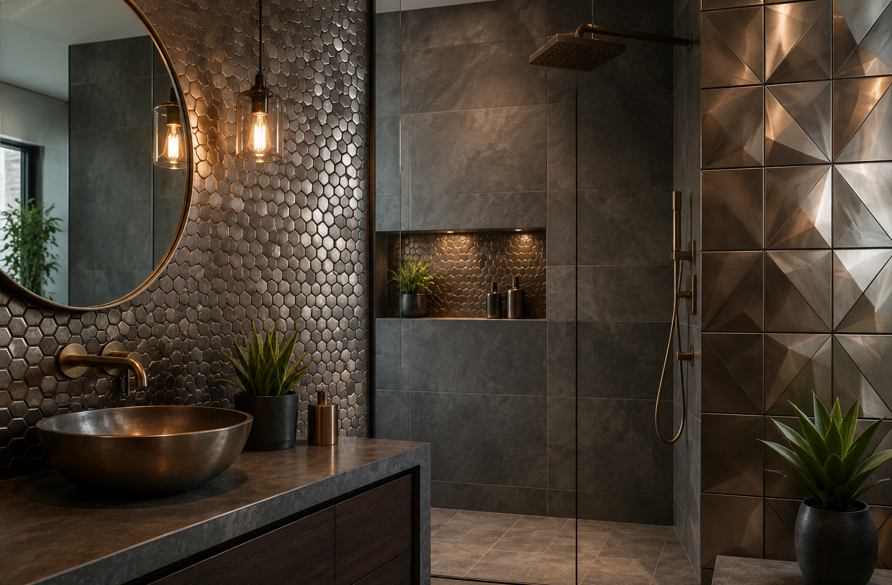
Give Your Bathroom a Modern Edge
A bathroom remodel is an opportunity to introduce materials that feel fresh, polished, and personal. Tile often does most of the visual work, but the most memorable bathrooms usually include one carefully chosen accent that brings the design together. Metal tile can provide that finishing touch.
Metal tile is rarely used to cover every wall or floor. Instead, it works best as a focused feature. A slim shower border, metallic vanity backsplash, or reflective shower niche can add depth without overwhelming the room. Metal catches the light, coordinates with modern fixtures, and creates contrast against porcelain, glass, natural stone, and solid surfaces.
For Mesa homeowners, metal tile can be particularly effective in bathrooms that need more visual energy or a refined focal point. It suits contemporary rooms but can also complement industrial, transitional, Southwestern, and luxury designs when selected thoughtfully.
At Manufacturers Floor Covering Outlet, homeowners can compare metal finishes, shapes, and complementary materials with guidance from knowledgeable local design professionals. Seeing samples beside faucets, cabinetry, countertops, and wall tile makes it easier to understand how each finish will look in the completed space.
The key is balance. Metal tile should support the bathroom’s overall design rather than compete with every other feature. This guide explores popular finishes, practical applications, coordinating materials, maintenance, and installation considerations.
What Is Metal Tile?
Metal tile is a decorative surface material made entirely from metal or manufactured with a metal layer over another base. Products may use stainless steel, aluminum, copper, brass, bronze, or coated finishes designed to create a similar appearance.
Construction varies by manufacturer. Some tiles are solid metal, while others have a thin metal face bonded to ceramic, porcelain, or another backing. This affects weight, cutting methods, recommended adhesives, care, and approved applications.
Common Metal Tile Materials
Stainless steel is known for its clean, contemporary appearance. It coordinates naturally with chrome fixtures, stainless steel details, and cool gray palettes.
Aluminum is lightweight and available in many finishes. It can create a modern look without appearing as visually heavy as darker metals.
Copper offers warmth and natural color variation. Depending on the product and protective finish, its tone may change over time.
Brass and bronze bring golden or brown undertones that work beautifully with warm cabinetry, stone, and lighting.
Some products combine metal with glass, stone, or ceramic in mosaic patterns. These mixed-material tiles can help connect metallic details with other surfaces in the room.
Why Metal Tile Works Best as an Accent
Metal is visually strong. Even a small section can attract attention because it reflects light and contrasts with softer or more matte materials.
Using it as an accent creates a deliberate focal point while keeping the bathroom balanced. It also allows homeowners to enjoy a premium finish without covering a large area.
Popular Metal Tile Finishes for Mesa Bathrooms
The finish has as much influence as the metal itself. Brushed, polished, hammered, matte, and aged surfaces each create a different mood.
Brushed Metal
Brushed metal has fine directional lines that soften reflections and create a refined, modern appearance. It is one of the easiest finishes to coordinate because it feels current without looking overly glossy.
Brushed stainless steel and brushed nickel-style tile work well with:
Cool gray or white porcelain
Concrete-inspired surfaces
Matte black fixtures
White oak or walnut cabinetry
Minimalist vanities
Frameless shower glass
The subtle texture may also make fingerprints and minor marks less noticeable than they would be on a mirror-polished surface.
Polished Metal
Polished metal has a highly reflective finish that can brighten a small or dim bathroom. It creates a crisp, luxurious effect, especially when used in thin borders, mosaics, or carefully framed details.
Because polished metal reflects nearby colors and objects, it may look different throughout the day. In a Mesa bathroom with strong natural light, it can appear bright and dramatic. Under warm artificial lighting, it may take on a softer tone.
Polished finishes are best used selectively. Too much reflection can make a room feel visually busy.
Hammered and Textured Metal
Hammered metal features surface variations that catch light from several angles. The result can feel handcrafted, dimensional, and warm.
This finish works especially well in bathrooms that mix modern features with Southwestern or artisanal influences. It may complement:
Natural stone
Warm plaster tones
Wood-look tile
Copper or bronze fixtures
Handcrafted cabinetry
Desert-inspired colors
Textured metal may disguise minor marks more effectively than a smooth surface, although deeper textures can take more effort to clean.
Matte Metal
Matte metal has a softer, low-sheen appearance. It feels understated and works well when homeowners want a metallic detail without strong reflection.
Matte black, charcoal, and muted bronze finishes can create definition around niches, mirrors, and backsplashes. They pair naturally with streamlined vanities and neutral wall tile.
Aged and Patinated Finishes
Aged finishes create the appearance of metal that has developed character over time. They may include darkened edges, color variation, or a patina-inspired surface.
These finishes can add warmth to transitional, rustic, or Southwestern bathrooms. They look particularly cohesive when repeated through cabinet hardware, lighting, or faucets.
Check whether the aged appearance is a stable manufactured finish or a surface designed to continue changing.
The Best Places to Use Metal Tile
Metal tile has the greatest impact when placed where the eye naturally goes. A thoughtful location can make a small amount of material feel purposeful and complete.
Shower Niches
A shower niche is one of the most effective places for a metallic accent. The smaller area allows homeowners to introduce a bold finish without covering an entire wall.
Metal tile can line the back of the niche or form a narrow border around it. Keep the surrounding shower tile simple enough to let the accent stand out.
Confirm that the selected product is approved for the moisture exposure and cleaning routine expected inside a shower.
Shower Borders and Feature Strips
A narrow horizontal or vertical strip can break up a large area of porcelain or stone tile. It creates structure and connects the shower design with nearby fixtures.
A slim brushed-metal border can feel tailored and modern. A mixed mosaic with copper or bronze may create a warmer, more decorative effect.
Vanity Backsplashes
The wall behind a vanity is another practical place for metal tile. It can provide contrast while protecting the area from routine splashes.
Metal works particularly well beneath a mirror or between the countertop and a wall-mounted cabinet. A compact backsplash can repeat the finish of the faucets, lighting, or drawer pulls.
Mirror Frames and Wall Details
Metal tile can be arranged as a border around a mirror or used to create a framed wall panel. This treatment gives a standard mirror a more customized appearance.
Keep the grout lines, tile scale, and surrounding finishes simple so the border feels precise rather than crowded.
Tub Surround Accents
A narrow metallic band around a tub surround can add definition without dominating the room. Warmer finishes coordinate well with cream, beige, travertine-inspired, and wood-look surfaces.
Cool stainless steel or aluminum finishes complement white, gray, charcoal, and blue palettes.
Powder Room Feature Walls
A powder room offers more freedom to use bold materials because it is smaller and generally receives less moisture than a full bathroom.
A focused metal mosaic behind the vanity can create a memorable first impression. Pair it with straightforward lighting, a clean-lined mirror, and a restrained countertop.
Coordinating Metal Tile With Bathroom Materials
Metal tile looks most polished when it repeats or complements another finish in the room.
Match the Color Temperature
Metals generally read as warm or cool.
Warm finishes include:
Copper
Brass
Bronze
Antique gold
Cool finishes include:
Stainless steel
Chrome
Brushed nickel
Silver-toned aluminum
Warm metals tend to pair well with beige, cream, terracotta, walnut, and natural stone. Cool metals suit white, gray, blue, black, and concrete-inspired surfaces.
Mixing warm and cool metals can work, but it needs a clear plan. Repeating each finish elsewhere helps the combination feel intentional.
Coordinate With Plumbing Fixtures
Metal tile does not always need to match the faucets and shower hardware exactly. A close relationship in color, undertone, or sheen may be enough.
For example, brushed stainless steel tile can sit comfortably beside brushed nickel fixtures, even when the tones are not identical. Aged bronze tile may coordinate with matte black hardware when both share a deep, low-sheen appearance.
Bring fixture samples or finish swatches when reviewing tile.
Pair It With Porcelain or Ceramic
Simple porcelain or ceramic tile gives metal accents room to stand out. Large-format wall tile, subway tile, and stone-look porcelain all provide strong backgrounds.
A metallic feature strip can also create a clean transition between two tile colors or sizes.
Combine It With Natural Stone
Metal and stone create a rich contrast between manufactured precision and organic variation. Copper, brass, and bronze can highlight warm mineral tones in travertine, limestone, and marble.
Cool stainless steel finishes may bring attention to gray veining or darker stone. Because both materials can have strong visual movement, avoid combining too many competing patterns.
Consider Countertops and Cabinetry
Metal accents can connect a vanity countertop with cabinet hardware or lighting. Brushed brass can warm deep green or navy cabinetry, while stainless steel can sharpen the appearance of white or charcoal cabinets.
Homeowners exploring metal tile should compare samples with every major finish in the bathroom, not only the main wall tile. A sample group containing the countertop, cabinetry, hardware, flooring, and paint color can reveal whether the complete palette feels balanced.
Practical Considerations Before Choosing Metal Tile
Metal tile is decorative, but it still needs to perform in a bathroom environment.
Confirm the Approved Application
Not every metal tile is approved for every location. Some products may work on dry walls and backsplashes but not inside showers, on floors, or in areas exposed to standing water.
Review manufacturer guidance for:
Wet-area use
Shower walls
Steam exposure
Floor applications
Recommended adhesives
Approved cleaning products
Sealing requirements
Avoid assuming that one metal product will perform the same way as another.
Think About Water Spots and Fingerprints
Smooth, reflective metal may show water spots, fingerprints, soap residue, or cleaning streaks more readily than brushed and textured finishes.
This does not make polished metal unsuitable, but it may influence placement. A polished vanity backsplash may be easier to maintain than a large polished surface inside a frequently used shower.
Consider Natural and Artificial Light
Metal reflects its surroundings. In a bathroom with strong Mesa sunlight, a polished surface near a window may create more glare than expected.
Review samples in the actual room when possible. Look at them under daylight, vanity lighting, and overhead lighting.
Check the Edge Details
Some metal tiles have finished edges, while others require trim. Exposed edges around niches, backsplashes, and feature panels need to be planned before installation begins.
The trim should coordinate with the tile finish and surrounding materials.
Cleaning and Maintaining Metal Tile
Care requirements vary by metal and finish. The safest approach is to follow the specific manufacturer’s instructions.
Use Nonabrasive Cleaning Methods
A soft cloth or sponge is generally preferable to rough pads and stiff brushes. Abrasive tools may scratch polished, brushed, or coated surfaces.
Avoid Harsh Cleaning Products
Acidic, alkaline, chlorine-based, and abrasive cleaners may discolor or damage certain metal finishes. A product marketed as a general bathroom cleaner may not be suitable for every tile.
Dry Reflective Surfaces
Drying polished metal after cleaning can reduce visible water spots and streaks. A clean microfiber cloth often works well.
Understand the Specific Finish
Stainless steel, copper, aluminum, and coated metals do not all react the same way. Some are designed to remain stable, while others may change naturally.
Understanding that difference before purchase helps prevent unexpected results.
Installation Details That Shape the Finished Look
Small decorative tile requires precision. Uneven spacing, rough cuts, and poorly planned edges become more noticeable on reflective materials.
Begin With a Flat, Stable Surface
The installation surface needs to be clean, stable, and suitable for the product. Small mosaics may reveal uneven areas that larger tiles would disguise.
Use the Recommended Installation Products
The wrong adhesive may affect bond strength or interact with the tile backing. Light-colored or reflective materials may also reveal shadows from installation products.
Follow the manufacturer’s instructions rather than relying on one general tile method.
Select Grout Carefully
Grout can either blend with the metal or frame each tile.
Matching grout creates a smoother visual field. Contrasting grout emphasizes shape and pattern. Test the combination because grout color can influence the final appearance more than expected.
Plan Cuts and Borders
Reflective tile draws attention to edges and alignment. The layout should account for corners, niches, mirrors, outlets, and transitions before the first tile is set.
Professional installers can help create consistent spacing and cleaner details, particularly with mosaics, mixed materials, and specialty trim.
Is Metal Tile Right for Your Bathroom?
Metal tile may be a strong choice when you want a modern focal point without replacing every surface in the room.
Choose Metal Tile If You Want:
A distinctive decorative accent
More light reflection in a compact bathroom
A finish that coordinates with hardware
A modern, industrial, transitional, or luxury look
Added texture around a niche or backsplash
A customized detail in a focused area
Contrast against stone, porcelain, ceramic, or glass
Consider It Carefully If You:
Prefer surfaces that disguise water spots
Want to use one product across wet walls and floors without checking its approval
Plan to clean with harsh or abrasive products
Already have several bold patterns in the room
Do not want a reflective focal point
Have not reviewed edge, trim, and grout details
Four Questions to Ask Before Buying
Is this exact product approved for the intended location?
Does its finish coordinate with the fixtures and lighting?
Am I comfortable with its recommended cleaning routine?
Will the tile enhance the design or compete with other materials?
Create a Bathroom With a Polished Point of View
Metal tile can transform a standard bathroom detail into a memorable focal point. Brushed finishes feel refined and versatile. Polished metal adds brightness and drama. Hammered surfaces introduce dimension, while aged brass, bronze, and copper tones bring warmth and character.
The most successful designs use metal selectively. A shower niche, vanity backsplash, feature strip, tub accent, or mirror border is often enough to make a bathroom feel customized.
Before deciding, compare samples beside the fixtures, cabinets, countertop, and main tile. Pay attention to sheen, undertone, texture, and how the surface responds to Mesa’s strong natural light.
Manufacturers Floor Covering Outlet helps homeowners in Mesa and nearby communities compare high-quality materials with knowledgeable design guidance and professional installation support. Ready to explore modern accents for your bathroom? Get in touch to discuss your project and request a free in-home estimate.


