

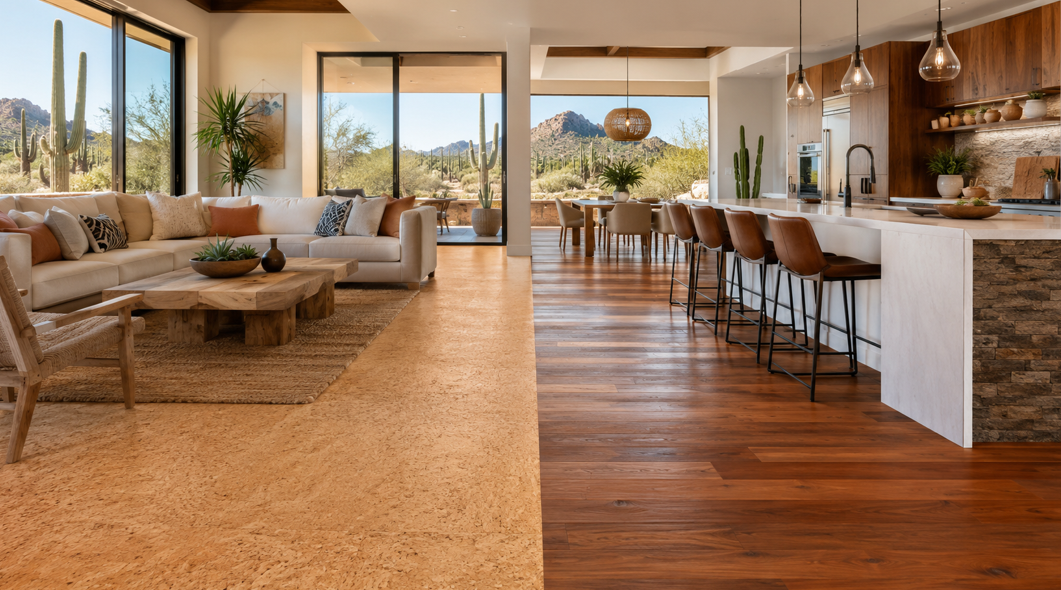
Choosing Between Two Warm, Natural-Looking Floors
Flooring has a major influence on how a Scottsdale home feels. It affects the room’s warmth, comfort, sound, style, and everyday upkeep. Cork and hardwood both bring a natural look indoors, yet they offer very different experiences underfoot.
Cork is known for its softness, quiet feel, and distinctive texture. Hardwood is valued for its classic appearance, long-term design appeal, and broad range of species, stains, and plank styles. Both can work beautifully in Arizona homes when the product, room, and installation method are a good match.
For many homeowners, the choice comes down to this: cork may be the better fit when comfort, sound control, and a softer walking surface are top priorities. Hardwood may be the stronger choice when traditional style, refinishing potential, and a familiar natural-wood appearance matter most.
At Manufacturers Floor Covering Outlet, Scottsdale-area homeowners can compare flooring samples, construction types, finishes, and installation options with help from knowledgeable local professionals. Seeing full-size samples in person makes it easier to judge color, texture, sheen, and how each floor responds to the light in your home.
Neither material wins every category. The better option depends on the room, household activity, maintenance preferences, sunlight exposure, and the look you want to create. This guide compares cork and hardwood across comfort, durability, moisture, climate, design, installation, care, and long-term value.
What Is Cork Flooring?
Cork flooring is made from the bark of the cork oak tree. The bark can be harvested without cutting down the tree, which is one reason cork appeals to homeowners interested in renewable materials.
Why Cork Feels Different
Cork contains a cellular structure filled with tiny pockets of air. That structure gives it a naturally resilient feel. It compresses slightly under pressure and then recovers, which creates a softer walking surface than many hard floors.
Cork’s Natural Sound Control
The same structure that gives cork its softer feel also helps absorb sound. Footsteps may sound quieter, and rooms may feel less echoey than they would with a harder surface.
The Look of Cork
Traditional cork has visible swirls, flecks, and natural pattern variation. It can feel warm, organic, and modern at the same time.
Available colors range from pale natural tones to deeper brown, gray, and stained finishes. Some products preserve cork’s recognizable appearance, while others offer a cleaner or more contemporary visual.
What Is Hardwood Flooring?
Hardwood flooring is made from real wood and is available in solid and engineered formats. Solid hardwood is milled from a single piece of wood. Engineered hardwood uses a real wood wear layer over a layered core designed to improve dimensional stability.
Species, grade, stain, plank width, surface texture, and finish all influence the final look and performance.
A Familiar, Timeless Appearance
Hardwood remains popular because it works with many design styles. Depending on the species and finish, it can feel traditional, rustic, coastal, modern, or refined.
Oak, maple, hickory, walnut, and other species each offer different grain patterns and color ranges. Smooth boards create a clean look, while wire-brushed or hand-scraped textures add depth and may disguise minor marks.
Solid vs. Engineered Hardwood
Solid hardwood may offer greater refinishing potential, depending on board thickness and product construction. Engineered hardwood often provides more stability when indoor conditions change, although every product has its own installation and care requirements.
For Scottsdale homes, the construction type matters because air conditioning, seasonal dryness, and changes in indoor humidity can affect wood movement.
The Design Range
Homeowners can choose from light natural finishes, medium browns, rich dark stains, wide planks, narrow boards, matte surfaces, and more textured looks.
Comfort and Feel Underfoot
Comfort is one of the clearest differences between cork and hardwood.
Cork Offers a Softer Step
Cork has a slightly cushioned feel that can reduce the sense of hardness underfoot. It may be appealing in rooms where people stand for long stretches, such as a home office, craft room, or play area.
The surface is still firm enough for everyday use, but it does not feel as rigid as hardwood, tile, or stone.
Hardwood Feels Solid and Substantial
Hardwood has a firmer walking surface. Many homeowners appreciate that solid feeling and the natural warmth of real wood.
Temperature and Scottsdale Living
Both cork and hardwood generally feel warmer underfoot than tile or natural stone. Cork often feels especially comfortable because its structure does not transfer temperature as quickly.
In air-conditioned Scottsdale homes, that warmer feel may be pleasant in bedrooms and living spaces. The exact sensation depends on the product, underlayment, subfloor, and room conditions.
Durability and Everyday Wear
Both materials can provide lasting performance, but they respond differently to traffic, furniture, pets, and impact.
How Cork Handles Daily Activity
Cork can compress under heavy furniture or concentrated pressure. Protective pads beneath table legs, sofas, desks, and shelving can help distribute weight.
Sharp pet nails, dragged furniture, and pointed objects may leave marks. A quality finish and sensible care routine can reduce visible wear, but cork is not the best match for every high-impact environment.
Cork’s natural pattern may disguise small marks better than a smooth, uniform floor. Product quality and wear-layer construction also make a meaningful difference.
How Hardwood Handles Daily Activity
Hardwood can develop scratches, dents, and changes in sheen over time. Harder wood species may resist denting better than softer species, although finish quality, household habits, and surface texture also affect appearance.
A textured or matte finish may hide everyday wear better than a glossy, smooth surface. Some homeowners appreciate the way real wood develops character, while others prefer to keep the surface looking as uniform as possible.
Homeowners comparing hardwood flooring can review different species, constructions, and finishes to find a product suited to their household’s activity level.
Pets and Active Households
For homes with pets, keep nails trimmed and clean up water promptly. Entry mats can reduce dust and grit, which may act like an abrasive on either material.
Cork’s softer surface may feel comfortable for pets, but it may also show claw marks more readily. Hardwood may offer more finish and species options for managing visible wear.
Moisture, Spills, and Cleaning
Neither cork nor hardwood is a carefree choice for standing water. Both need prompt cleanup and product-specific care.
Cork and Moisture
Cork flooring may be finished to resist everyday spills, but water can still affect seams, edges, and the material beneath the surface. Kitchens, entryways, and other spill-prone rooms need careful product selection and installation.
Bathrooms, laundry areas, and below-grade spaces require particular attention to manufacturer approval. A product suited to one room may not be approved for another.
Hardwood and Moisture
Wood naturally responds to moisture. Spills left on the surface may affect the finish or move into seams. Large changes in indoor humidity can also cause boards to expand, contract, cup, or gap.
Engineered hardwood may offer greater stability than some solid products, yet it still needs proper environmental control and installation.
Routine Cleaning
For cork:
Remove grit with a soft broom or hard-floor vacuum setting.
Use a damp, not saturated, cleaning method.
Choose a cleaner approved by the flooring manufacturer.
Wipe spills promptly.
Avoid abrasive pads and harsh chemicals.
For hardwood:
Sweep or vacuum regularly.
Use a cleaner approved for the finish.
Keep excess water off the floor.
Wipe spills promptly.
Protect high-traffic areas with suitable mats or rugs.
Always follow the specific care instructions supplied with the chosen product.
Arizona Dryness, Air Conditioning, and Sunlight
Scottsdale’s outdoor climate does not remain outside the home. Air conditioning, dry air, large windows, and seasonal changes can influence interior flooring.
Indoor Humidity Matters
Cork and hardwood both perform best within the temperature and humidity range recommended by the manufacturer. Extreme dryness may cause natural materials to contract, while higher moisture levels may lead to expansion.
A stable indoor environment supports better long-term performance. This may involve consistent air-conditioning use and, where appropriate, monitoring indoor humidity.
Avoid choosing a product before checking its environmental requirements and warranty conditions.
Direct Sunlight
Strong sunlight can affect the appearance of many flooring materials. Cork and hardwood may change color over time, although the degree depends on the product, finish, species, and exposure.
Window coverings, solar shades, and furniture rotation can help create more even exposure. Place samples near windows and view them at several times of day before making a decision.
Acclimation and Installation Conditions
Many natural flooring products need time to adjust to the home’s interior conditions before installation. Requirements vary by product, so the installer needs to follow the manufacturer’s instructions rather than applying one general rule.
The subfloor also needs to be clean, flat, stable, and suitable for the installation method.
Style and Design Possibilities
Both floors bring warmth to a room, but they communicate very different design ideas.
Cork Feels Organic and Contemporary
Cork works well in modern, mid-century, casual, and eco-conscious interiors. Its texture can add visual interest without feeling busy.
Natural cork tones coordinate with warm whites, desert-inspired colors, light woods, and matte finishes. Darker stained cork can create a richer look in offices, media rooms, and bedrooms.
Hardwood Offers Familiar Versatility
Hardwood can support nearly any interior style. Light oak may create an airy, relaxed appearance. Medium tones can add warmth without dominating the room. Deep brown finishes may feel formal or dramatic.
Connecting Multiple Rooms
Hardwood is often selected for visual continuity across living rooms, dining areas, hallways, and bedrooms. Cork can also flow through several rooms, but product approval and transition planning remain important.
Consider doorway placement, room size, natural light, and the relationship between flooring and cabinetry before selecting a color.
Installation and Repair Considerations
The quality of installation has a direct effect on appearance and performance.
Cork Installation
Cork may be installed as glue-down tiles or floating planks, depending on the product. Each format has specific subfloor, adhesive, expansion, and environmental requirements.
A smooth base is important because imperfections may show through some cork products. Seams and edges also need careful attention in areas where spills may occur.
Hardwood Installation
Hardwood installation may involve nail-down, staple-down, glue-down, or floating methods. The correct approach depends on the product, subfloor, room, and manufacturer.
Board layout affects how the floor looks through doorways and across long spaces. Careful planning can reduce awkward transitions and narrow cuts.
Repair and Refinishing
Some hardwood floors can be sanded and refinished, although the number of possible refinishes depends on the construction and wear-layer thickness.
Certain cork floors may be refreshed with an approved finish, while others are better handled through plank or tile replacement. Repair options vary widely, so ask about them before purchasing.
Cost and Long-Term Value
Pricing varies by product quality, construction, finish, installation method, and site conditions. It is more useful to compare complete project value than material price alone.
Factors That Influence Project Cost
Consider:
Flooring material and grade
Room size and layout
Removal of existing flooring
Subfloor preparation
Underlayment or adhesive
Transitions and trim
Installation labor
Finish or sealing requirements
Future maintenance
Value Beyond Initial Price
Cork may offer value through comfort, sound absorption, and a distinctive appearance. Hardwood may offer value through broad design appeal, established familiarity, and possible refinishing options.
The best value comes from choosing a product that suits the room and household. A lower initial price has limited benefit if the floor does not match daily use or care preferences.
Which Flooring Is Better for Your Scottsdale Home?
A simple decision framework can help narrow the choice.
Cork May Be Better If You:
Want a softer and quieter floor.
Prefer a distinctive natural texture.
Spend long periods standing in the room.
Like contemporary or eco-conscious design.
Want a surface that feels warmer underfoot.
Are comfortable using furniture pads and following cork-specific care guidance.
Need added sound control in an office, bedroom, or upstairs space.
Hardwood May Be Better If You:
Want a classic real-wood appearance.
Prefer a wider range of species, stains, and plank styles.
Value the possibility of refinishing, where the product allows it.
Want visual continuity across several rooms.
Prefer a firmer, more traditional walking surface.
Need broad design flexibility.
Like the way natural wood develops character over time.
Consider Cork Carefully If You:
Have very heavy furniture with narrow legs.
Expect frequent standing water or delayed spill cleanup.
Have large pets with active claws.
Prefer a highly uniform surface.
Want a product for a room not approved by the manufacturer.
Consider Hardwood Carefully If You:
Want a softer surface underfoot.
Prefer stronger natural sound absorption.
Expect large swings in indoor humidity.
Plan to install the floor in a moisture-prone area without checking product approval.
Want to avoid visible scratches, dents, or natural color change.
Make the Choice That Fits Your Home
Cork and hardwood both bring warmth and natural character to Scottsdale interiors, but they solve different priorities.
Cork stands out for comfort, quietness, resilience, and a distinctive organic appearance. It can be an excellent choice for bedrooms, offices, family rooms, and spaces where a softer step matters.
Hardwood stands out for timeless style, design variety, and the familiar beauty of real wood. It works especially well when homeowners want one cohesive floor across several living areas.
The final decision comes down to how the room is used, the level of activity in the household, moisture exposure, maintenance preferences, and the visual effect you want.
Compare full-size samples in your home whenever possible. Look at them beside cabinets, furniture, walls, and doors. Check how they appear in morning light, direct afternoon sun, and evening lighting.
Manufacturers Floor Covering Outlet serves Scottsdale and nearby communities with a wide selection of quality flooring, knowledgeable guidance, and professional installation support. Ready to compare cork and hardwood for your home? Get in touch to discuss your space and request a free in-home estimate.


